Comfort at Home: A Complete Guide to Red Light Therapy for Your Pets
Watching our pets slow down, struggle with stairs, or deal with a lingering ache is one of the hardest parts of being a pet parent. We want them to be happy, mobile, and pain-free for as long as possible. While modern veterinary medicine offers many options, many of us are looking for extra ways to support our companions at home. Red light therapy has emerged as a gentle, non-invasive way to do exactly that.
By using specific wavelengths of light to support cellular health, we can often help our pets handle pain and recovery from the comfort of their favorite rug or bed.
What Is Red Light Therapy?
Red light therapy, also known in scientific circles as photobiomodulation (PBM), uses light in the red and near-infrared spectrum to interact with living tissue. Unlike surgical lasers that generate heat to cut or cauterize, therapeutic light is "cold." It does not burn; instead, it triggers a reaction within the cells.
The Science Behind the Light
Every cell in your pet’s body contains mitochondria. These act as the batteries of the cell. When these mitochondria are stressed—due to injury, inflammation, or simply the wear and tear of aging—they become less efficient.
When specific wavelengths of light hit these cells, the light is absorbed by the mitochondria. This gives the cell a surge of energy. With this new energy, the cell can:
-
Repair damage more quickly.
-
Produce proteins that reduce inflammation.
-
Increase blood flow to the area, which delivers oxygen and nutrients to tissues that need them.
For a deeper look into the clinical research regarding how this light affects biological systems, you can explore the studies available on PubMed.
Why Use It for Pets?
The primary appeal of red light therapy for pets is that it is safe, drug-free, and pain-free. For many animals, the stress of a car ride or a busy clinic can actually increase their physical tension, which makes healing harder. By using devices at home, you allow your pet to stay in a space where they feel safe and relaxed.
Common Conditions That May Improve
While you should always start by talking to your veterinarian to get a clear diagnosis, red light therapy is often used to assist with:
-
Arthritis and Joint Pain: This is the most common reason pet parents seek out light therapy. It helps reduce the internal swelling in joints, allowing for smoother movement.
-
Muscle Soreness: Just like humans, pets can pull muscles or get stiff after a long hike or an intense play session.
-
Wound Healing: If your pet has a surgical incision, a minor scrape, or a hot spot, the light can speed up the closure of the wound.
-
Back Pain: Especially for breeds prone to spinal issues, light therapy can help manage discomfort in the tissues surrounding the spine.
-
Senior Pet Support: As pets age, their natural recovery speed slows down. Regular, light, soothing sessions can help them feel more youthful and willing to engage with the family.
Introducing the TheraCrate
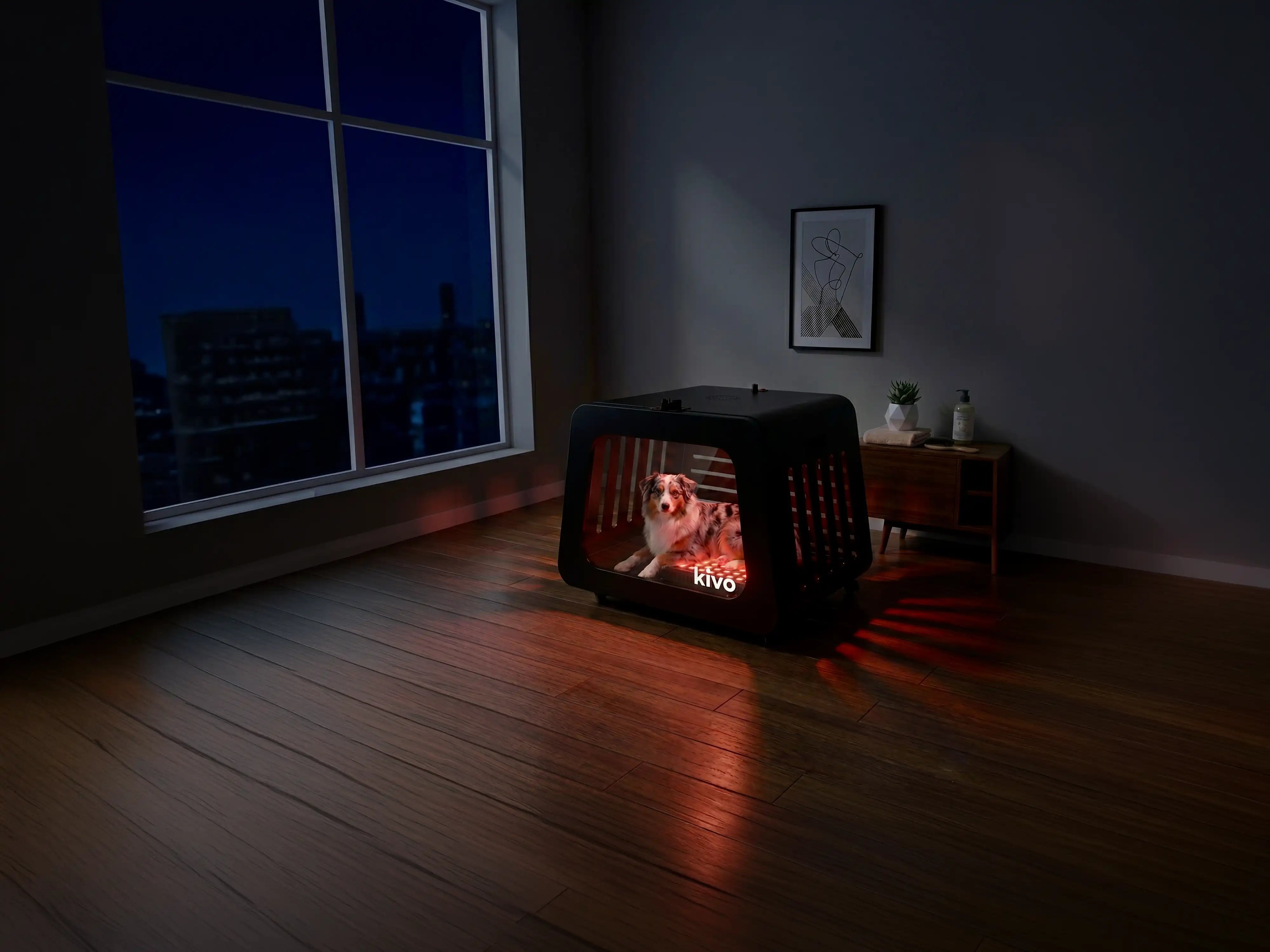
The biggest hurdle for many owners is consistency. If you have to go to a clinic three times a week, life often gets in the way. The TheraCrate from Kivo Therapy was designed to solve this by bringing the treatment to the pet’s environment.
The TheraCrate acts as a specialized space where your pet can relax while receiving treatment. Because the lights are integrated into the structure, you do not have to hold a wand or keep your pet perfectly still for a long time. They can nap, chew a toy, or just rest while the light does the work.
Step-by-Step Treatment Protocols
To get the best results, consistency is more important than intensity. Think of it like physical therapy for humans—one session helps, but a series of sessions creates lasting change.
Step 1: The Initial Assessment
Before starting, observe your pet.
-
Keep a Log: Note how they move. Do they hesitate at the stairs? Do they have trouble standing up after a nap? How is their mood?
-
Talk to Your Vet: Ensure there are no underlying infections or conditions that require a different type of medical intervention.
Step 2: Getting Them Acclimated
Some pets are naturally curious or slightly nervous about new equipment.
-
Introduction: Place the TheraCrate in a familiar room with their favorite blanket inside. Let them investigate it without turning the lights on at first.
-
Positive Association: Give them treats or praise when they step inside. The goal is for them to see this crate as a "spa" area where good things happen.
Step 3: Setting the Schedule
Most protocols follow a "loading phase" followed by a "maintenance phase."
-
Loading Phase (Weeks 1–4): Aim for 3 to 5 sessions per week. This provides enough energy to the cells to start changing the environment of the joint or tissue. Sessions usually last between 5 and 15 minutes, depending on the manufacturer’s instructions for the specific device.
-
Maintenance Phase (Week 5 and beyond): Once you see improvement, you can move to 1 or 2 sessions per week to keep the progress going.
Step 4: During the Session
-
Comfort is Key: If your pet is agitated, they will not get the full benefit. Ensure they are comfortable.
-
Eye Safety: While modern LED-based red light therapy is generally safe, it is wise to avoid shining the lights directly into your pet's eyes. Most systems are designed so the light is directed at the body, but it is good practice to be mindful.
-
Direct Contact: For the best results, the light should be as close to the skin as possible. If your pet has long, thick fur, you may need to gently part the hair so the light can penetrate the skin.
Step 5: Monitoring and Adjusting
If you do not see changes in the first week, do not worry. Cellular healing takes time. Look for subtle shifts:
-
Better Rising: Are they getting up from their bed faster?
-
Increased Interest: Do they seem more interested in toys or walks?
-
Sleeping Habits: Are they sleeping through the night without shifting positions due to discomfort?
Common Questions and Tips
What if my pet moves around?
Pets rarely stay perfectly still, and that is okay. The beauty of a system like the Kivo TheraCrate is that it provides consistent light to the general area even if your pet shifts slightly. You do not need clinical precision for home maintenance.
Can I do too much?
While red light therapy is very safe, there is a point of diminishing returns. More light does not always mean faster healing. Stick to the recommended time guidelines. If you notice your pet becoming restless or seeming sensitive, reduce the duration of the sessions.
Are there any risks?
There are very few risks. However, you should not use red light therapy over active tumors or cancerous areas, as it may stimulate cellular growth. Always check with your veterinarian if your pet has a history of cancer.
Building a Support Routine
Red light therapy works best when it is part of a larger, supportive routine. To give your pet the best quality of life, consider how these elements work together:
-
Weight Management: Carrying extra weight is the single biggest strain on a pet's joints. Keep them at a healthy weight to ensure any therapy you use has a solid foundation to work on.
-
Soft Bedding: Using an orthopedic bed, especially if you are not using a specialized device like the TheraCrate, helps take pressure off sore joints.
-
Gentle Movement: Regular, low-impact exercise—like slow walks on soft grass—is much better than intense, "weekend warrior" exercise that leads to soreness.
-
Nutrition: Talk to your vet about supplements like Omega-3 fatty acids, which naturally help manage inflammation from the inside out.
Final Thoughts on Pet Care
Being a pet owner is a long-term commitment to their comfort. When we see them struggle, we feel a natural desire to fix it. Red light therapy gives us a proactive, gentle way to contribute to their physical well-being. By taking the time to learn how to use tools like the TheraCrate and maintaining a consistent routine, you are doing something tangible to help your pet live a happier, more active life.
Remember, the goal is not to "fix" aging, but to support the body’s natural desire to heal and maintain comfort. Be patient, stay consistent, and enjoy those extra moments of play or walks that your pet is now able to enjoy with you. If you have questions about your pet’s specific needs, your veterinarian is always your best resource for creating a tailored health plan.
This guide is for informational purposes only. Always consult your veterinarian before beginning any new treatment or therapy for your pet.