 100% CANADIAN OWNED & OPERATED - FAST FREE Shipping
- Get a
100% CANADIAN OWNED & OPERATED - FAST FREE Shipping
- Get a 
Learn about Red Light Therapy
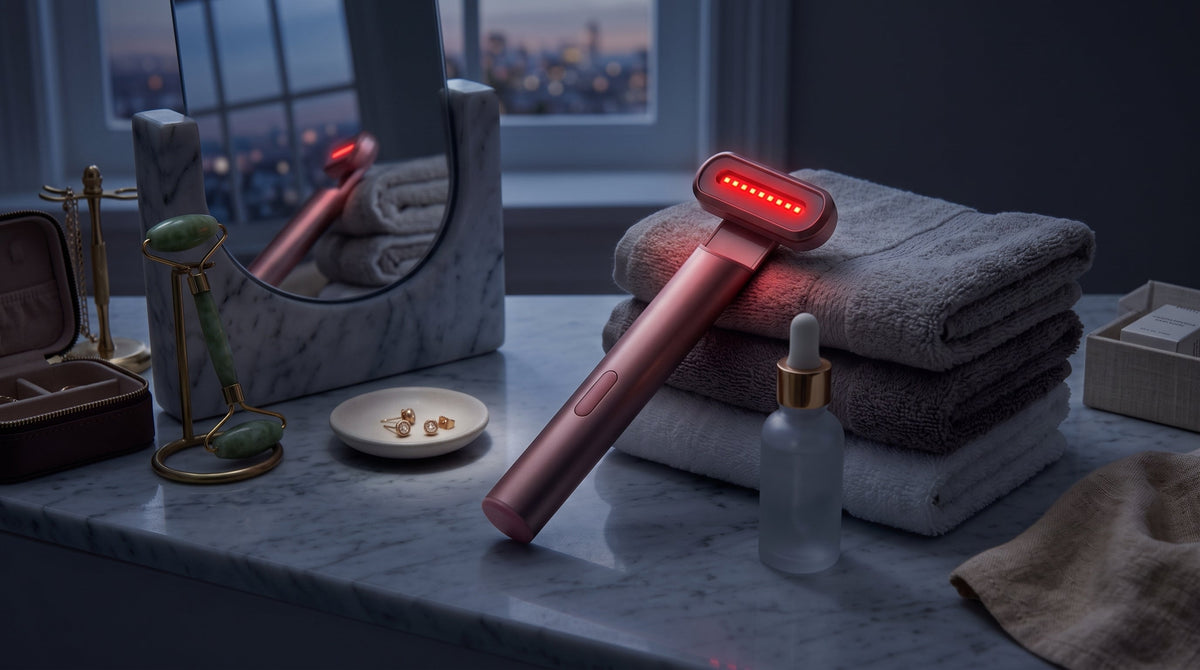

Red Light Therapy and Perimenopause
Red Light Therapy for Perimenopause: A Supportive Guide to Naturally Easing Symptoms Perimenopause is a natural transition, but the physical and emotional shifts can feel overwhelming. Up to 80% of women notice significant changes during this stage, which can begin years before periods stop completely. Hormone replacement therapy and dietary adjustments are popular options, but red light therapy has become a popular, non-invasive home tool to help support hormonal balance, skin health, and everyday energy. What Is Perimenopause? Perimenopause is the multi-year transition leading up to menopause. During this window, your ovaries gradually slow down hormone production, but hormone levels do not decline in a straight line. Instead, they spike and plunge unpredictably. Key facts about the perimenopause transition: Timeline: It usually begins in your 40s (sometimes late 30s) and typically lasts between 4 and 8 years. Hormonal swings: Estrogen levels fluctuate erratically while progesterone steadily drops. The official marker: You remain in perimenopause until you have gone 12 consecutive months without a menstrual cycle. At that point, you have reached menopause. Common symptoms: Irregular cycles, sleep disruptions, sudden temperature changes, mood shifts, brain fog, vaginal dryness, and joint aches. How Does Red Light Therapy Work? Red light therapy - also known as photobiomodulation or low-level light therapy - uses specific wavelengths of visible red light (around 660 nm) and invisible near-infrared light (around 850 nm). Natural sunlight provides these same restorative wavelengths at sunrise and sunset without harmful ultraviolet (UV) radiation. Here is how these wavelengths interact with your body at a cellular level: Boosts cellular energy: Red and near-infrared light penetrate your skin to reach the mitochondria (the powerhouses of your cells). This light stimulates the production of adenosine triphosphate (ATP), giving your cells the fuel they need to repair and regenerate. Improves blood flow: Light therapy prompts your blood vessels to release nitric oxide. This naturally dilates vessels, improves circulation, and delivers fresh oxygen and nutrients to tissues. Lowers inflammation: Near-infrared wavelengths penetrate deep into tissues and joints to calm swelling and reduce oxidative stress. Supports mood chemicals: Exposure to therapeutic light encourages the release of beta-endorphins, which help soothe physical discomfort and lift mood. How Red Light Therapy Supports Perimenopause Symptoms Because perimenopause affects many bodily systems at once, red light therapy helps address multiple symptoms simultaneously without medication side effects. 1. Easing Hot Flashes and Night Sweats Hot flashes are triggered when shifting estrogen levels confuse the hypothalamus - the temperature regulation center in the brain. Light therapy supports the central nervous system and helps stabilize daily circadian rhythms. Regular red light sessions can calm stress responses and reduce the frequency or intensity of sudden hot flashes. Recommended device: For full-body systemic balance, explore the Kivo Red Light Therapy Panels. 2. Restoring Deep, Restful Sleep Nearly half of all women in perimenopause report trouble falling or staying asleep due to night sweats, racing thoughts, or progesterone drops. Unlike daytime blue light from phones and televisions, red light signals to your brain that it is time to rest. Evening red light exposure helps your body produce melatonin naturally, making it easier to drift into deep sleep without morning grogginess. Recommended device: Use a bedside panel like the Kivo ONE Series for 10 to 15 minutes while winding down at night. 3. Improving Skin Elasticity, Dryness, and Hormonal Breakouts Falling estrogen slows down collagen synthesis, leading to thinner skin, fine lines, and sudden dryness. At the same time, hormonal imbalances can trigger unexpected adult breakouts. Red light triggers fibroblasts in the dermis to produce fresh collagen and elastin, restoring skin firmness. Near-infrared light calms redness, irritation, and dryness. Certain multi-wavelength devices also provide blue light to clear acne-causing bacteria. Recommended device: The hands-free Kivo Elite LED Face Mask delivers targeted facial rejuvenation in comfortable 10-minute sessions. 4. Supporting Hair Density and Scalp Health Many women notice excess hair shedding or thinning along their parting line during perimenopause. Red light penetrates the scalp to revitalize dormant hair follicles. It increases local blood supply, ensuring follicles receive the nutrients needed to produce thicker, stronger hair strands. Recommended device: The wearable Kivo Elite LED Red Light Therapy Cap provides focused scalp coverage while you read or relax. 5. Soothing Stiff Joints and Muscle Aches Estrogen protects joints and tendons from inflammation. When levels fluctuate and fall, joint stiffness and body aches frequently appear. Near-infrared wavelengths travel deep into muscles, ligaments, and cartilage. Increased circulation clears waste products and delivers repairing nutrients to inflamed joints. Recommended device: For targeted relief on knees, shoulders, hands, or feet, the portable Kivo Vital MINI lets you focus light exactly where you hurt. Step-by-Step Instructions: How to Start at Home Adding red light therapy to your daily wellness routine is straightforward. Here is a step-by-step approach to get the best results: Step 1: Set up your space. Place your device on a table, use a floor stand, or put on your wearable mask/cap in a comfortable, quiet room. Step 2: Cleanse the treatment area. Remove heavy makeup, sunscreens, or thick lotions so light can penetrate your skin effectively. Step 3: Protect your eyes. While red light is safe, high-powered panels are bright. Wear the provided eye protection goggles during your session. Step 4: Keep the proper distance. Sit or stand 6 to 12 inches away from light panels. Wearable masks and caps sit directly against your skin. Step 5: Time your session. Start with 10 minutes per treatment area. Consistency is key - aim for 3 to 5 sessions per week. Step 6: Follow with your standard skincare. Apply your favorite hydrating serums and moisturizers immediately after your session, as skin absorbs topicals well following light therapy. Safety and What to Expect No UV radiation: Red light devices do not use UV rays, meaning there is zero risk of sunburn or skin damage. No downtime: Treatments produce a gentle, soothing warmth and require no recovery period. Non-invasive: It offers a gentle complementary option alongside your existing perimenopause self-care plan. Helpful References Hode, T., et al. "The Use of Low-Level Laser Therapy (LLLT) For Musculoskeletal Pain." PMC, 2015. Liebert, Ann D., et al. "Comparative Effectiveness of Low-Level Laser Therapy for Adult Androgenetic Alopecia." PMC, 2010. "Menopause and Sleep." National Sleep Foundation, 2021. Sotogarcia, L. "The Effects of Red Light Therapy on Joint Pain and Stiffness." California State University, 2018. "Perimenopause: Signs, Symptoms, and Management." The North American Menopause Society.
Learn more
How Long Should I Do Light Therapy For?
How Long Should I Do Light Therapy For? If you recently got a light therapy panel, mask, or flashlight - or if you are looking into getting one for skin care or muscle recovery - you probably have one big question on your mind: How long should each session actually last? It is easy to think that sitting in front of a light for an hour will give you four times the benefits of a 15-minute session. Light therapy does not work that way. Your cells have a sweet spot for how much light energy they can take in at one time. Here is a straightforward guide to help you set the right timers for your sessions based on the exact wavelengths used in Kivo Light Therapy devices. The Core Rule: Why More Light Is Not Always Better Light therapy works through a scientific rule called the biphasic dose response. That sounds technical, but the idea is simple: Too little light: Your cells do not get enough energy to trigger changes. The right amount of light: Your cells get energized, speeding up repair and collagen production. Too much light: Your cells get full, lose their boost, and temporarily stop responding. Think of it like charging a smartphone. Once your battery hits 100%, leaving it on the charger for another five hours will not give you extra battery life. Keeping your sessions within the recommended time window gives you the best results without wasting time. Session Times by Light Wavelength & Goal Different light wavelengths reach different depths in your tissue. Here is how long you should run each specific light mode. 1. Blue Light Therapy (480nm Wavelength) What it targets: Skin surface, acne-causing bacteria, and oil balance. Ideal session length: 3 to 5 minutes per area (up to 10 minutes maximum for a full face treatment). Distance from skin: 3 to 6 inches (10 to 15 cm). Best time of day: Morning or early afternoon (before 1-2 pm). Blue light is fantastic for clearing up surface spots and keeping skin clean. Because blue light mimics bright daylight, it tells your brain that it is time to wake up. Using blue light late in the evening can mess with your body clock and make it harder to fall asleep at night. If you are using a portable option like the Kivo Pro Flashlight on small spots, 5 minutes per spot is plenty. If you are using a multi-light panel like the Kivo ONE Pro Panel, set the timer for 10 minutes on your face. 2. Red Light Therapy (630nm and 660nm Wavelengths) What it targets: Skin health, collagen production, reducing redness, and soothing surface inflammation. Ideal session length: Face treatments: 10 minutes. Body areas (shoulders, arms, back): 10 to 15 minutes. Distance from skin: 3 to 6 inches (10 to 15 cm). Best time of day: Any time before 6 pm. Red light reaches the outer layers of your skin to help rebuild collagen and keep your skin tone balanced. A quick 10-minute session on your face with a device like the Kivo Elite Face Mask or a panel from the Kivo ONE Series is enough to give your skin cells a solid energy bump. 3. Near-Infrared Light Therapy (810nm, 830nm, 850nm, and 940nm Wavelengths) What it targets: Deeper muscle tissue, joints, tendons, and post-workout recovery. Ideal session length: 10 to 15 minutes per target area. Distance from skin: 3 to 6 inches (10 to 15 cm). Best time of day: Before 6 pm. Near-infrared (NIR) light is invisible to the human eye, but it travels deeper into your body than red or blue light. It reaches sored muscles and stiff joints to lower soreness after workouts or sports. Because NIR light goes deeper, your tissue benefits from a slightly longer session of 10 to 15 minutes per zone. Larger setups like the Kivo THREE Series or the full-body Kivo TWELVE Series allow you to cover larger areas of your body in one single 10 to 15 minute run. 4. Scalp Care (660nm Red and 850nm Near-Infrared) What it targets: Scalp circulation and hair follicle health. Ideal session length: 10 minutes per session. Frequency: 3 to 4 times per week. For hair and scalp health, consistency matters more than long individual sessions. A dedicated device like the Kivo LED Light Therapy Cap uses dual-chip LEDs to deliver red and near-infrared light right to the hair roots in an easy 10-minute automated routine. Step-by-Step Instructions for Your Light Routine To get clean, predictable results every time, follow these steps during your regular sessions: Step 1: Clean your skin. Wash off makeup, sunscreen, or heavy lotions before starting. Clean, bare skin lets the light penetrate without reflections. Step 2: Put on eye protection. Put on dark protective goggles (like the eye guards included with Kivo panels) when treating your face or working near your eyes. Step 3: Check your distance. Position yourself 3 to 6 inches (10 to 15 cm) away from the panel or device. Step 4: Select your light mode. Use Blue Light in the morning for acne or surface skin care. Use Red + Near-Infrared Light for general skin glow, joint relief, or muscle recovery. Step 5: Set your timer. Keep face treatments between 3 and 5 minutes. Keep muscle or joint treatments between 10 and 15 minutes. Step 6: Finish with your standard skin routine. Apply your usual moisturizer or serum after your session is finished. Quick Reference Cheatsheet Light Color / Type Target Wavelengths Recommended Time Target Area Best Time of Day Blue Light 480nm 3 - 5 minutes Facial skin, spots, breakouts Morning to 2:00 PM Red Light 630nm, 660nm 5 - 10 minutes Face, chest, skin tone Morning or afternoon (before 6:00 PM) Near-Infrared (NIR) 810nm, 830nm, 850nm, 940nm 10 - 15 minutes Muscles, joints, deep repair Before 6:00 PM Scalp Care 660nm + 850nm 10 minutes Scalp and hair roots Any time during the day Common Mistakes to Watch Out For Sitting too close or too far: Sitting 2 feet away makes the light too weak to be effective. Pressing up against a high-power panel can make the area uncomfortably warm. Stick to the 3-to-6 inch range. Using blue light at night: Blue light tricks your brain into thinking it is noon. Stick to morning use for blue light so your evening sleep signals stay normal. Overdoing it out of impatience: Doing three 20-minute sessions in one day will not speed up your skin progress. Stick to 3 to 5 regular sessions per week. Skipping eye protection: Light panels are very bright. Always use protective goggles during facial treatments. Simple Summary for Getting Started Keep face treatments between 5 and 10 minutes. Keep body and muscle treatments between 15 and 20 minutes. Stay 3 to 6 inches away from your panel during treatment. Repeat your routine 3 to 5 days a week. Focus on consistency over duration... short regular sessions beat long random ones every time!
Learn more
BEWARE of cheap Red Light
Red light therapy has grown rapidly in popularity, and for good reason. It supports cellular health, speeds up muscle recovery, and keeps skin looking fresh. But as demand builds, a serious problem has appeared online. The market is flooded with dirt-cheap panels that look fine on the outside but are completely hollow, ineffective, or even harmful on the inside.
Learn more
Red Light Therapy for Pets
If you have ever looked for ways to help your aging pet move more comfortably or speed up the healing of a small scrape, you might have heard about red light therapy. Often called photobiomodulation, this approach is becoming quite common in veterinary care. It is a non-invasive, drug-free way to help our furry, and non-furry family friends feel better.
Learn more
Red Light Therapy for Migraines and Headaches
Migraine sufferers often search for non-invasive solutions that avoid the side effects associated with traditional pharmaceutical treatments. Red and Near-Infrared light are gaining recognition as evidence-based tools for long-term migraine prevention and management.
Learn more
Red Light Therapy Dosage Calculator
Getting the right dosage of Light Therapy is crucial to obtaining the results you're looking for. Our exclusive algorithm takes into account the outcomes of thousands of customers, feedback, as well as the results of numerous scientific studies, we've built a red light therapy dosage calculator that takes in the irradiance of a device, the distance you want to use it, whether you're changing brightness / pulse modes / treatment type, and takes all of that into account to calculate the correct dosage you need. Red Light Dosage Calculator
Learn more
Red Light & Near-Infrared Therapy for Concussions & Head Injury Recovery
Red and near-infrared light therapy—also known as photobiomodulation—is emerging as a promising treatment for concussions and brain injuries. By boosting cellular energy, improving blood flow, and reducing inflammation, red light helps the brain recover naturally after trauma. Clinical studies from institutions like Mass General Hospital and JAMA Network show it can improve brain connectivity, memory, and mood following head injuries.
Learn more
How Red Light & Near-Infrared Therapy Can Optimize Pre-Op and Post-Op Surgical Recovery
Red and near-infrared light therapy (often called photobiomodulation) can be a powerful ally before and after surgery. By boosting cellular energy, improving circulation, and reducing inflammation, this safe, non-invasive treatment helps your body recover faster, with less pain and smoother healing. When used pre-surgery, it “preconditions” tissues for better resilience, and post-surgery it supports faster wound repair and scar reduction.
Learn more
Red and Near-Infrared to help Nerve Regeneration
Nerve damage is one of the most challenging conditions to treat. Whether caused by injury, surgery, diabetes, or chronic illnesses, damage to peripheral nerves often leads to pain, numbness, tingling, and impaired function. Unlike skin or muscle, nerve tissue regenerates very slowly, and in some cases, healing is incomplete. Traditional treatments often focus on managing symptoms rather than repairing the underlying damage. In recent years, however, there has been growing interest in a non-invasive approach that may support the body’s ability to repair nerve tissue: red and near-infrared (NIR) light therapy, also known as photobiomodulation (PBM). Studies are beginning to show that PBM can stimulate cellular repair processes, improve circulation, and enhance recovery in nerve-related conditions. So, how does this work — and what does the science say? How Red and Near-Infrared Light Affect Nerve Cells Both red light (around 630–660 nm) and near-infrared light (around 810–850 nm) penetrate tissues and are absorbed by mitochondria, the “powerhouses” of cells. Specifically, they target an enzyme called cytochrome c oxidase, which is part of the mitochondrial respiratory chain. When stimulated by these wavelengths, mitochondria produce more ATP (adenosine triphosphate) — the energy currency of the cell (NIH). In nerve cells, this extra energy allows for: Axonal repair: Damaged axons (the long projections of neurons) can regrow when energy demands are met. Myelin regeneration: Light therapy may support the repair of myelin, the protective sheath around nerves that is critical for fast and accurate signal transmission. Protein synthesis: Increased ATP fuels the creation of structural proteins needed for nerve repair. In short, light therapy helps “recharge” injured nerves so they can carry out the demanding process of repair. Reducing Oxidative Stress and Inflammation Nerve injury often creates an environment of oxidative stress, where excessive reactive oxygen species (ROS) damage cellular components. Photobiomodulation helps normalize ROS levels by making mitochondria more efficient. This not only protects neurons but also reduces secondary damage that can occur after the initial injury. In addition, light therapy reduces inflammatory cytokines — signalling proteins that can prolong pain and impair healing. By calming the inflammatory response, PBM creates a more favorable environment for regeneration. Research in the Journal of Neurotrauma found that NIR therapy not only reduced oxidative stress but also improved functional recovery after nerve injury (PubMed). Stimulating Neurotrophic Factors One of the most promising findings is that red and NIR light increase levels of neurotrophic factors. These are proteins that guide nerve growth, survival, and function. Among the most important are: Nerve Growth Factor (NGF): Promotes survival and growth of sensory and sympathetic neurons. Brain-Derived Neurotrophic Factor (BDNF): Supports synaptic plasticity, learning, and repair. A study published in Neuroscience Letters found that PBM increased expression of BDNF and NGF in animal models, leading to enhanced axon regeneration and functional recovery (NIH). This means that light therapy doesn’t just provide energy; it also helps activate the genetic and molecular programs necessary for nerves to rebuild themselves. Improving Circulation and Nutrient Delivery Nerves, especially peripheral nerves, have limited blood supply compared to other tissues. Poor circulation can slow healing and leave damaged nerves starved of oxygen and nutrients. Near-infrared light penetrates deeper than red light and stimulates nitric oxide release, which relaxes blood vessels and improves microcirculation. A study in Lasers in Surgery and Medicine demonstrated that animals treated with NIR after nerve injury had faster functional recovery and improved nerve conduction velocity compared to controls (PubMed). Improved blood flow is key not only for repair but also for clearing out metabolic waste products that accumulate in injured tissues. Evidence from Clinical and Preclinical Studies While much of the research has been done in animal models, the results are encouraging - and early human studies are beginning to confirm the benefits. Peripheral nerve injury: Animal studies show that PBM accelerates axonal regrowth and improves recovery of motor and sensory function. Carpal tunnel syndrome: Clinical trials using NIR light have reported reductions in pain and improvements in grip strength and nerve conduction (PubMed). Diabetic neuropathy: Studies suggest that PBM reduces pain and numbness while improving quality of life for patients with diabetic nerve damage. Post-surgical nerve recovery: Patients treated with red/NIR light after surgery have shown reduced pain, less inflammation, and better long-term functional outcomes. Although more large-scale clinical trials are needed, the existing data strongly suggest that photobiomodulation is a safe and effective adjunct therapy for nerve regeneration. What Patients Report Beyond the lab, many people using red and near-infrared therapy devices report improvements such as: Reduced tingling and numbness Decreased nerve pain Improved muscle activation in affected areas Better coordination and grip strength While individual results vary, these reports align with the physiological mechanisms demonstrated in research. Suggested Protocol for Nerve Regeneration (Using the Kivo Elite Panel) If you are considering red and NIR light therapy at home, consistency is key. Nerve healing is slow, and results are usually seen over weeks to months. A commonly recommended protocol is: Wavelength: Red + Near-Infrared Brightness: High (Level 5 on Kivo Elite Panel) Pulse: 40 Hz (associated with neurological repair and brain wave entrainment) Duration: 15–20 minutes per affected area Frequency: 5–7 times per week Treatment Length: At least 8–12 weeks, longer for chronic conditions This can be used alongside conventional treatments such as physical therapy, medications, and lifestyle interventions. Always consult a healthcare provider before starting new therapies, especially if you have a medical condition. For more Light Therapy Treatment Protocols, visit our help site: https://help.KivoTherapy.com Why This Matters Nerve damage can be life-changing, affecting mobility, sensation, and independence. Traditional medicine often offers limited solutions beyond pain relief. Light therapy represents a shift — instead of masking symptoms, it seeks to help the body heal itself. As the research base expands, red and near-infrared therapy may become a standard part of nerve rehabilitation protocols, both in clinics and at home. Devices like the Kivo Elite Panel make it possible to access this promising therapy safely and consistently. For those dealing with nerve injuries, neuropathy, or post-surgical recovery, photobiomodulation offers real hope: faster healing, less pain, and a better chance of regaining function.
Learn more
ADHD and Red Light Therapy
ADHD is more than just a buzzword these days. With rising diagnoses across all age groups, more people are looking for drug-free alternatives to help manage symptoms like brain fog, impulsivity, low motivation, and poor focus. One emerging tool that’s getting attention? Red light therapy and near-infrared (NIR) light therapy.
Learn more
Can You Overdo Light Therapy?
Light therapy is a powerful tool for skin health, injury recovery, and overall wellness — but like all good things, too much can become counterproductive. Whether you’re using red light, near-infrared (NIR), blue light, or yellow light therapy, understanding the limits is key to getting results without side effects.
Learn more
3 minutes of red light therapy can improve a person’s vision
Clinical Overview: 3 minute morning exposure to Red Light improves eyesight Introduction Mitochondrial dysfunction has emerged as a core mechanism behind many aging-related changes in physiology, including progressive visual decline. Recent research from University College London (UCL) suggests that targeted exposure to deep red light - specifically 600nm to 900nm - may partially restore mitochondrial function in human photoreceptors. In this article, we explore the study’s design and findings in detail, discuss mitochondrial bioenergetics in ocular tissues, and offer evidence-based recommendations for implementing red light therapy at home. We also link findings to Kivo’s red light products, which are designed to meet these parameters. The Role of Mitochondria in Retinal Aging Bioenergetic Demand of Photoreceptors The retina, particularly its photoreceptors (rods and cones), has one of the highest metabolic rates of any tissue in the human body. It requires continuous ATP generation for visual signal transduction, synaptic transmission, and photopigment regeneration. As humans age, mitochondrial respiration declines, ATP production drops, and reactive oxygen species (ROS) increase. This results in impaired photoreceptor function and a decline in both scotopic (night) and photopic (daylight/color) vision. Mitochondrial Decline After Age 40 Multiple studies have shown a steep decline in retinal mitochondrial efficiency by midlife, with some estimates suggesting a 70% reduction in ATP output by age 70. This bioenergetic shortfall correlates with clinical observations of diminished visual contrast, color discrimination, and visual acuity in aging adults. The UCL Study: Design, Exposure Protocol, and Results Study Design Published in Scientific Reports and summarized by Ophthalmology Times, the UCL study was led by Professor Glen Jeffery and investigated the effects of short-duration exposure to 670 nm deep red light on color contrast sensitivity in healthy adults aged 34–70. Sample: 20 participants, both male and female Age range: 34–70 Inclusion criteria: No history of ocular pathology, normal baseline visual function Exposure Parameters Wavelength: 670nm nanometers Duration: 3 minutes Frequency: Once per week Intensity: ~8 mW/cm² (non-thermal, well below phototoxicity thresholds) Time of day: Morning (between 8–9 AM) This low-level exposure does not damage retinal tissue, nor does it induce photobleaching. It instead serves to stimulate cytochrome c oxidase, the terminal enzyme in mitochondrial complex IV, enhancing ATP synthesis. Outcome Measures The primary outcome was color contrast sensitivity, assessed using standardized clinical tests. Measurements were taken: Baseline: Before red light exposure Post-Exposure: 3 hours after exposure Follow-Up: 1 week after exposure Key Results Average improvement in color contrast sensitivity: ~17% Maximum improvement in older subjects: ~20% Effect duration: Sustained at least 7 days Afternoon exposure (12–1 PM): No measurable benefit These results reinforce previous findings that retinal mitochondria exhibit diurnal variation in responsiveness, with higher red-light sensitivity in the morning. Clinical Insight: This is consistent with circadian control of mitochondrial respiration, likely modulated by the retinal suprachiasmatic input pathway. Mechanism of Action: How Red Light Affects Mitochondria Cytochrome c Oxidase Activation 670nm Red light falls within the photobiomodulation window (600–900 nm). This range penetrates tissue efficiently and is absorbed by cytochrome c oxidase. The result is: Increased electron transport Enhanced mitochondrial membrane potential Higher ATP output Reduced oxidative stress markers Specificity to Morning Exposure Morning responsiveness likely results from circadian upregulation of cytochrome c oxidase activity. Additionally, retinal mitochondrial respiration peaks earlier in the day, suggesting a time-of-day–dependent therapeutic window. Clinical Implications for Home Use Safety Profile The intensity used (~8 mW/cm²) is far below retinal phototoxicity thresholds. No adverse events were reported. However, guidance on eye safety is essential for home users. Refer to Is Red Light Therapy Safe for Your Eyes?, which outlines proper usage and protective eyewear considerations. Exposure Timing and Duration Ideal timing: 8–9 AM local time Duration: 3 minutes per week Distance: 30–50 cm from the device This matches the protocol used in the UCL study. For help on session timing and placement, see How Long Should You Use a Red Light Therapy Panel For?. Red Light Panels Designed for Retinal Support Kivo’s Red Light Therapy Panels deliver clinically relevant 630 to 660nm wavelengths with intensities and wavelength close to those validated in the UCL study. Units such as the Kivo Mini and Kivo Pro Panel are calibrated for safe and effective facial use. Key features include: 630 to 660nm wavelength support Low EMF output Quiet cooling Built-in timer for 3+ minute sessions Optional eye shields included You can learn more in our article: Red Light Therapy for Eyes & Eye Health Future Research and Limitations Study Size This was a pilot study with 20 subjects. Larger, multicenter randomized controlled trials (RCTs) are required to validate findings and assess long-term benefit. Objective Measures Future research may employ ERG (electroretinography), optical coherence tomography (OCT), and molecular biomarkers to quantify mitochondrial recovery and correlate it with functional vision gains. Disease-Specific Application While this study targeted normal aging, red light therapy is under investigation for conditions such as: Age-related macular degeneration (AMD) Diabetic retinopathy Glaucoma Initial findings suggest possible benefit in early-stage AMD, but these applications remain investigational. Best Practices for At-Home Use Parameter Recommendation Device Kivo panel with 630–660nm support Timing Between 8–9 AM Duration 3 minutes once per week Distance 30–50 cm from eyes Goggles Optional, depending on tolerance and brightness Skin Contact Not necessary—panel may be placed on a table Consistency Weekly sessions recommended Download our free Vision Wellness Tracking Sheet from help.KivoTherapy.com to help monitor personal progress. Conclusion This study represents a compelling new use for low-level red light therapy: targeted, non-invasive retinal rejuvenation through mitochondrial stimulation. With no known side effects, minimal cost, and a clearly defined dosing schedule, this is a promising area of home-based preventative vision care. Kivo provides professional-grade devices specifically built around this wavelength and intensity. For those over 40 seeking to protect or enhance their vision, Kivo’s red light panels may provide an accessible, scientifically grounded solution. Explore Kivo’s full collection of red light therapy devices or read more on the science in our blog: Red Light Therapy for Eyes & Eye Health Is Red Light Therapy Safe for Your Eyes? How Long Should You Use a Red Light Therapy Panel For?
Learn more



