100% CANADIAN OWNED & OPERATED - FAST FREE Shipping
- Get a
100% CANADIAN OWNED & OPERATED - FAST FREE Shipping
- Get a 
Red Light Therapy for Perimenopause: A Supportive Guide to Naturally Easing Symptoms
Perimenopause is a natural transition, but the physical and emotional shifts can feel overwhelming. Up to 80% of women notice significant changes during this stage, which can begin years before periods stop completely.
Hormone replacement therapy and dietary adjustments are popular options, but red light therapy has become a popular, non-invasive home tool to help support hormonal balance, skin health, and everyday energy.
What Is Perimenopause?
Perimenopause is the multi-year transition leading up to menopause. During this window, your ovaries gradually slow down hormone production, but hormone levels do not decline in a straight line. Instead, they spike and plunge unpredictably.
Key facts about the perimenopause transition:
-
Timeline: It usually begins in your 40s (sometimes late 30s) and typically lasts between 4 and 8 years.
-
Hormonal swings: Estrogen levels fluctuate erratically while progesterone steadily drops.
-
The official marker: You remain in perimenopause until you have gone 12 consecutive months without a menstrual cycle. At that point, you have reached menopause.
-
Common symptoms: Irregular cycles, sleep disruptions, sudden temperature changes, mood shifts, brain fog, vaginal dryness, and joint aches.
How Does Red Light Therapy Work?
Red light therapy - also known as photobiomodulation or low-level light therapy - uses specific wavelengths of visible red light (around 660 nm) and invisible near-infrared light (around 850 nm).
Natural sunlight provides these same restorative wavelengths at sunrise and sunset without harmful ultraviolet (UV) radiation.
Here is how these wavelengths interact with your body at a cellular level:
-
Boosts cellular energy: Red and near-infrared light penetrate your skin to reach the mitochondria (the powerhouses of your cells). This light stimulates the production of adenosine triphosphate (ATP), giving your cells the fuel they need to repair and regenerate.
-
Improves blood flow: Light therapy prompts your blood vessels to release nitric oxide. This naturally dilates vessels, improves circulation, and delivers fresh oxygen and nutrients to tissues.
-
Lowers inflammation: Near-infrared wavelengths penetrate deep into tissues and joints to calm swelling and reduce oxidative stress.
-
Supports mood chemicals: Exposure to therapeutic light encourages the release of beta-endorphins, which help soothe physical discomfort and lift mood.
How Red Light Therapy Supports Perimenopause Symptoms
Because perimenopause affects many bodily systems at once, red light therapy helps address multiple symptoms simultaneously without medication side effects.
1. Easing Hot Flashes and Night Sweats
Hot flashes are triggered when shifting estrogen levels confuse the hypothalamus - the temperature regulation center in the brain.
- Light therapy supports the central nervous system and helps stabilize daily circadian rhythms.
- Regular red light sessions can calm stress responses and reduce the frequency or intensity of sudden hot flashes.
-
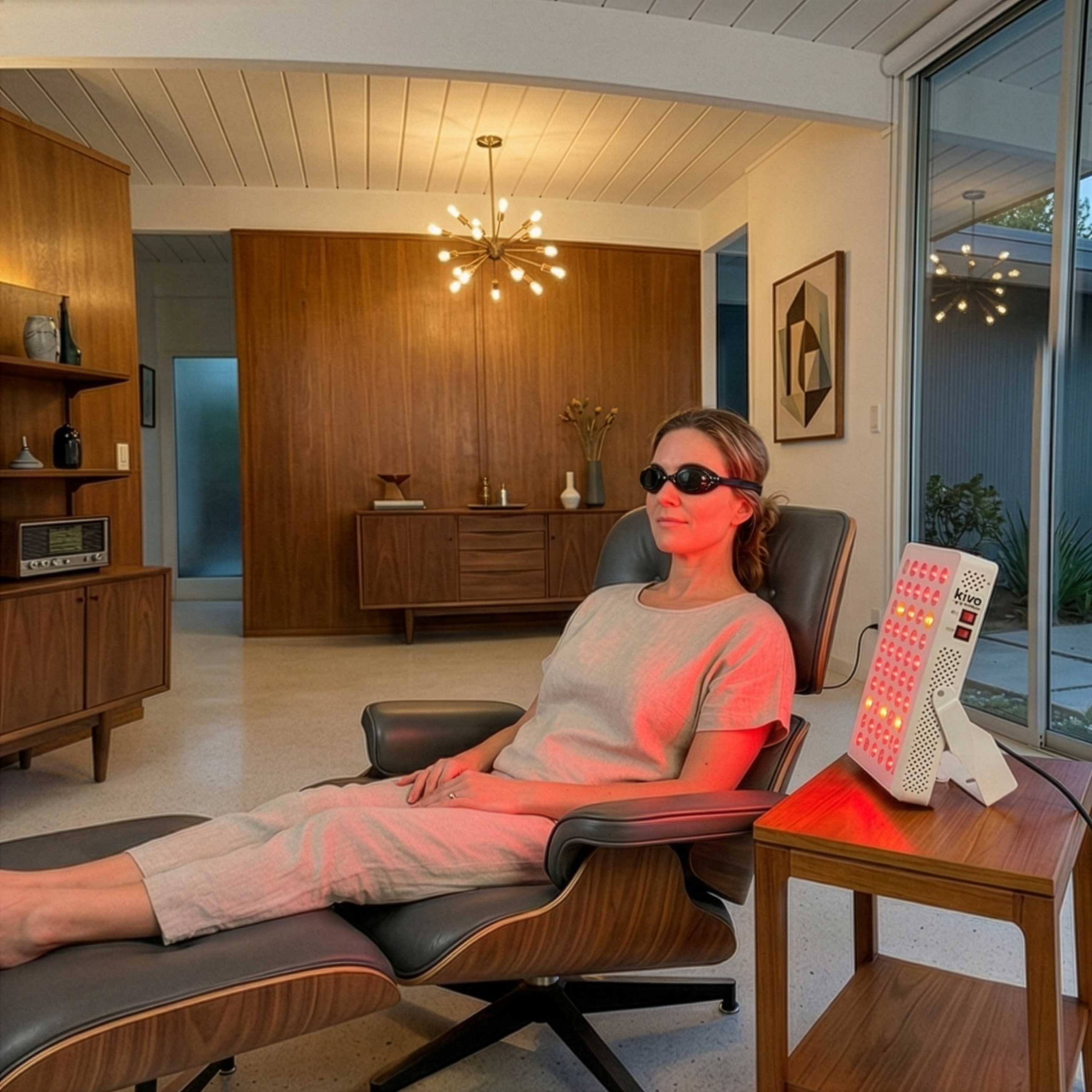
Recommended device: For full-body systemic balance, explore the Kivo Red Light Therapy Panels.
2. Restoring Deep, Restful Sleep
Nearly half of all women in perimenopause report trouble falling or staying asleep due to night sweats, racing thoughts, or progesterone drops.
- Unlike daytime blue light from phones and televisions, red light signals to your brain that it is time to rest.
- Evening red light exposure helps your body produce melatonin naturally, making it easier to drift into deep sleep without morning grogginess.
-
Recommended device: Use a bedside panel like the Kivo ONE Series for 10 to 15 minutes while winding down at night.
3. Improving Skin Elasticity, Dryness, and Hormonal Breakouts
Falling estrogen slows down collagen synthesis, leading to thinner skin, fine lines, and sudden dryness. At the same time, hormonal imbalances can trigger unexpected adult breakouts.
- Red light triggers fibroblasts in the dermis to produce fresh collagen and elastin, restoring skin firmness.
- Near-infrared light calms redness, irritation, and dryness.
- Certain multi-wavelength devices also provide blue light to clear acne-causing bacteria.
-
Recommended device: The hands-free Kivo Elite LED Face Mask delivers targeted facial rejuvenation in comfortable 10-minute sessions.
4. Supporting Hair Density and Scalp Health
Many women notice excess hair shedding or thinning along their parting line during perimenopause.
- Red light penetrates the scalp to revitalize dormant hair follicles.
- It increases local blood supply, ensuring follicles receive the nutrients needed to produce thicker, stronger hair strands.
-
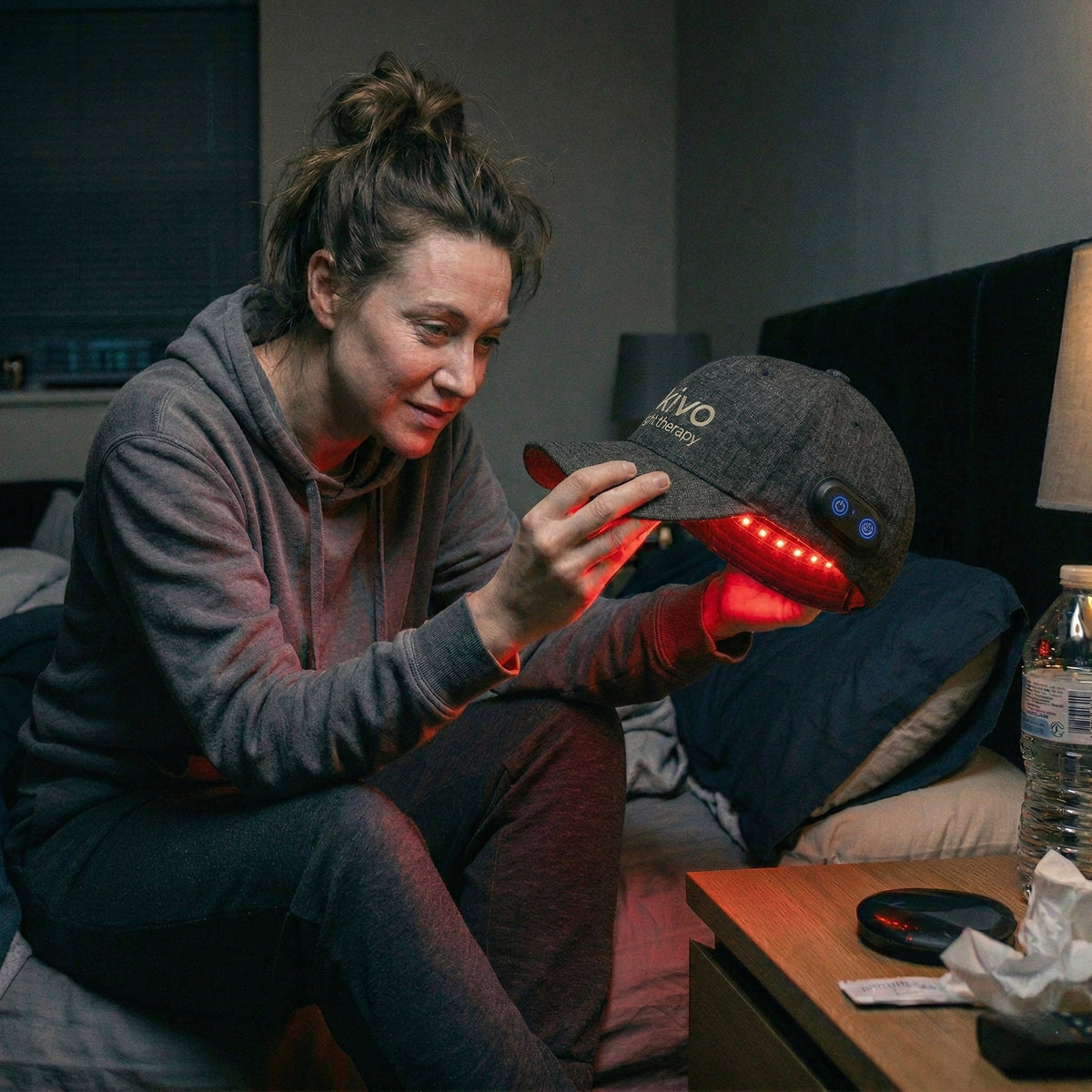
Recommended device: The wearable Kivo Elite LED Red Light Therapy Cap provides focused scalp coverage while you read or relax.
5. Soothing Stiff Joints and Muscle Aches
Estrogen protects joints and tendons from inflammation. When levels fluctuate and fall, joint stiffness and body aches frequently appear.
- Near-infrared wavelengths travel deep into muscles, ligaments, and cartilage.
- Increased circulation clears waste products and delivers repairing nutrients to inflamed joints.
-
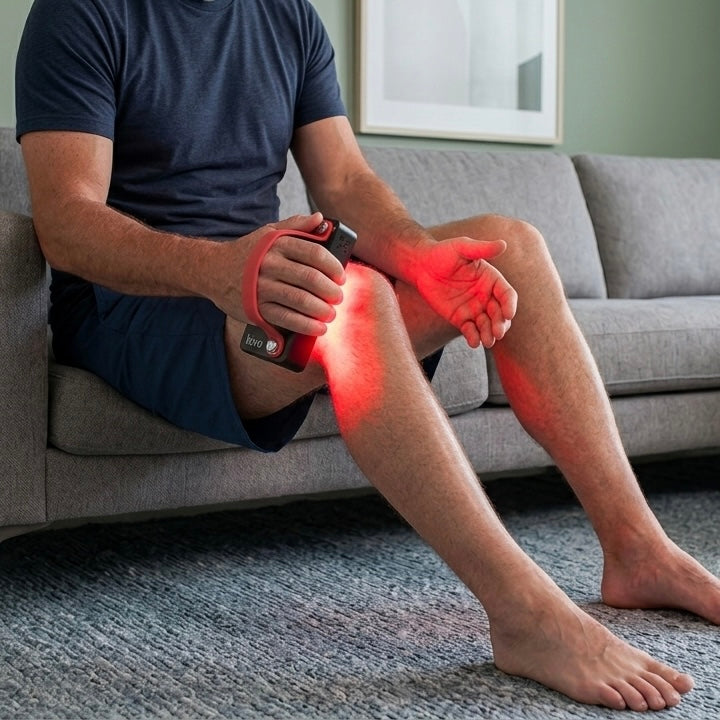
Recommended device: For targeted relief on knees, shoulders, hands, or feet, the portable Kivo Vital MINI lets you focus light exactly where you hurt.
Step-by-Step Instructions: How to Start at Home
Adding red light therapy to your daily wellness routine is straightforward. Here is a step-by-step approach to get the best results:
-
Step 1: Set up your space. Place your device on a table, use a floor stand, or put on your wearable mask/cap in a comfortable, quiet room.
-
Step 2: Cleanse the treatment area. Remove heavy makeup, sunscreens, or thick lotions so light can penetrate your skin effectively.
-
Step 3: Protect your eyes. While red light is safe, high-powered panels are bright. Wear the provided eye protection goggles during your session.
-
Step 4: Keep the proper distance. Sit or stand 6 to 12 inches away from light panels. Wearable masks and caps sit directly against your skin.
-
Step 5: Time your session. Start with 10 minutes per treatment area. Consistency is key - aim for 3 to 5 sessions per week.
-
Step 6: Follow with your standard skincare. Apply your favorite hydrating serums and moisturizers immediately after your session, as skin absorbs topicals well following light therapy.
Safety and What to Expect
-
No UV radiation: Red light devices do not use UV rays, meaning there is zero risk of sunburn or skin damage.
-
No downtime: Treatments produce a gentle, soothing warmth and require no recovery period.
-
Non-invasive: It offers a gentle complementary option alongside your existing perimenopause self-care plan.
Helpful References
- Hode, T., et al. "The Use of Low-Level Laser Therapy (LLLT) For Musculoskeletal Pain." PMC, 2015.
- Liebert, Ann D., et al. "Comparative Effectiveness of Low-Level Laser Therapy for Adult Androgenetic Alopecia." PMC, 2010.
- "Menopause and Sleep." National Sleep Foundation, 2021.
- Sotogarcia, L. "The Effects of Red Light Therapy on Joint Pain and Stiffness." California State University, 2018.
- "Perimenopause: Signs, Symptoms, and Management." The North American Menopause Society.